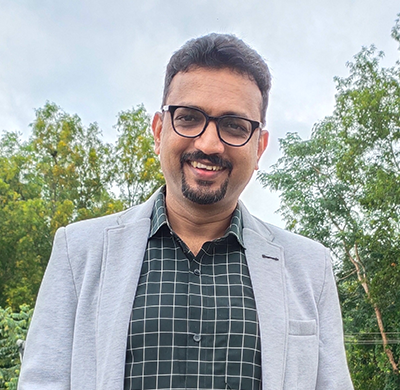
Satyanarayana
Dr. Satyanarayana Ramanaik is a social scientist with over 20 years of impactful work in public health and developmental issues in India. His extensive engagement with marginalized communities spans a range of critical areas, including HIV/AIDS, Gender-based Violence (GBV), Intimate Partner Violence (IPV), Migration, Child Marriage, School Dropout, and Adolescent Health. He has been a pivotal force behind large-scale public health interventions and collaborative research initiatives in partnership with esteemed donors and academic institutions such as the Bill & Melinda Gates Foundation, USAID, WHO, London School of Hygiene and Tropical Medicine (LSHTM), University of Manitoba, the Government of Karnataka, and the Government of India.
A distinguished qualitative researcher, Dr. Ramanaik has contributed significantly to the field. His work has led to the publication of over 40 peer-reviewed articles in prestigious national and international journals. He holds a Ph.D. in Social Work, a testament to his scholarly commitment. His research journey was enriched by a fellowship from the HIV Research Trust, UK, which supported his doctoral research. His academic pursuit also led him to be a part of CIHR International Infectious Disease and Global Health Training Program (IID&GHTP), offered by the University of Manitoba, Canada.
Presently, as Thematic Lead for Adolescent Health at KHPT, Dr. Ramanaik spearheads efforts in Gender Based Violence, nutrition, menstrual hygiene, and mental health for adolescent girls in rural India. His exceptional journey blends academic excellence, ground breaking research, and dedicated community engagement, establishing him as a driving force in the realm of public health and social advancement.
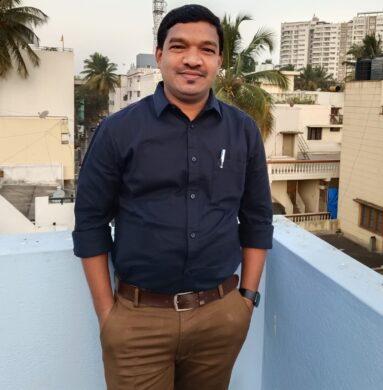
Prakash Marpady
Prakash Marpady is a social researcher and development practitioner with more than 15 years of experience in teaching, research and project management. He has largely worked with HIV/AIDS, Tribal Welfare, Adolescent Health and CSR initiatives. A strong believer in a people-centric approach, and deeply anticipate change at the structural level for an inclusive society. He has experience in using participatory methods for program planning, monitoring and evaluation.
He obtained his Master’s in Social Work, M.Phil in Development Studies and Ph.D in Social Work from Mangalore University. He was the recipient of a Junior Research Fellowship from UGC, New Delhi. He has published research articles on social exclusion, women empowerment, human rights and tribal health. He is interested in reading emancipatory literature and authored a book on ‘Community Organisation and Social Action in Social Work’.
Shivayogi B Matapathi
Sathyasree Goswami