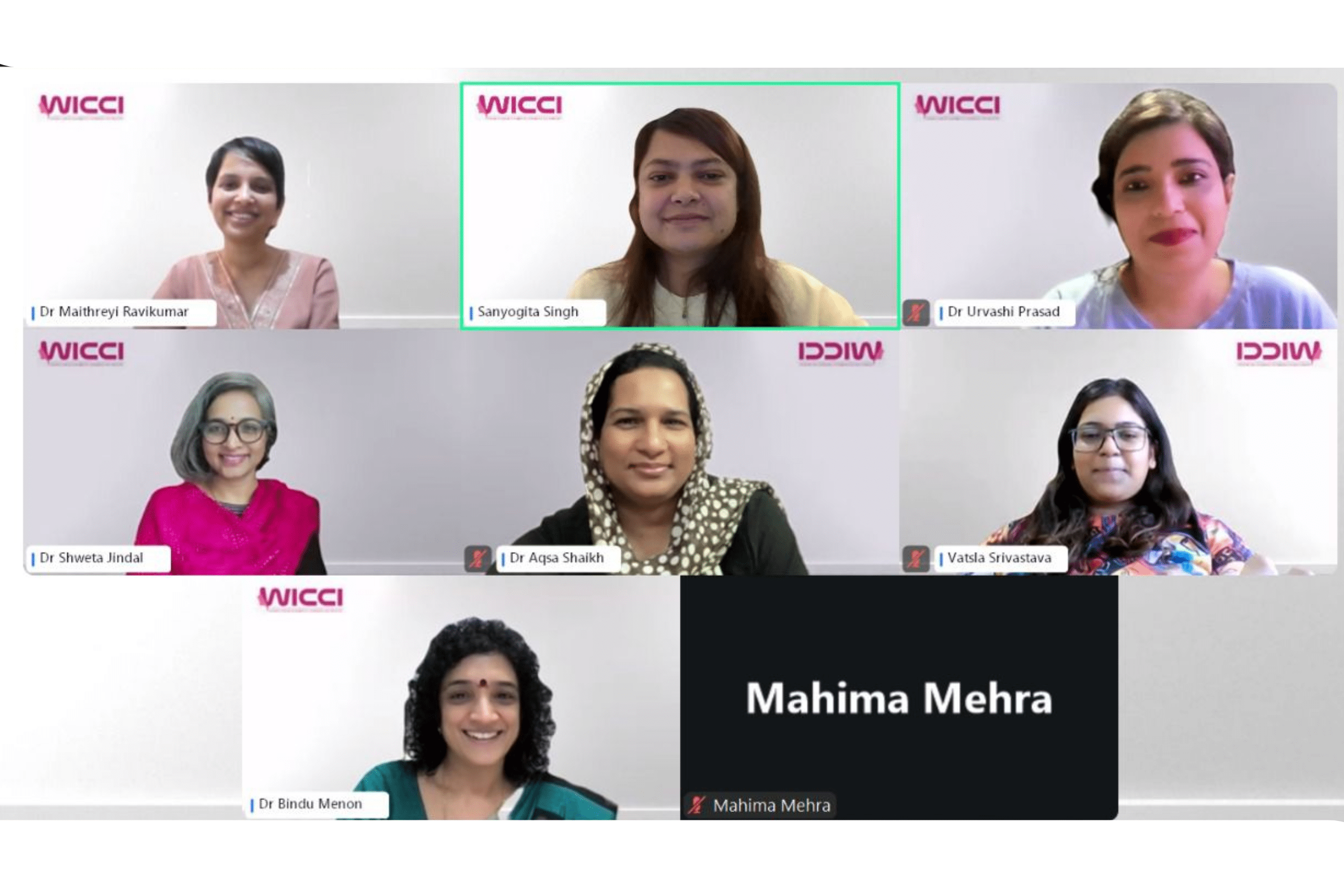
On July 22, 2025, an exploratory virtual convening hosted by KHPT and Dasra (Secretariat to ClimateRISE Alliance), brought together key organisations, including CEEW, WRI India, Swasti, Jhpiego, and ARTPARK, working across diverse priorities of climate-health systems adaptation and resilience.
Organizations deliberated on a key question, “How can we build urban health systems capable of withstanding escalating climate impacts while serving our most vulnerable populations?” The conversation revealed significant progress across multiple aspects of climate-health work, while bringing to the surface gaps that demand coordinated, ecosystem-level responses. What emerged from the discussion was both informative and actionable; a clear assessment of where we stand and a roadmap for collective advancement.
Current landscape: The climate-health systems context and islands of innovation
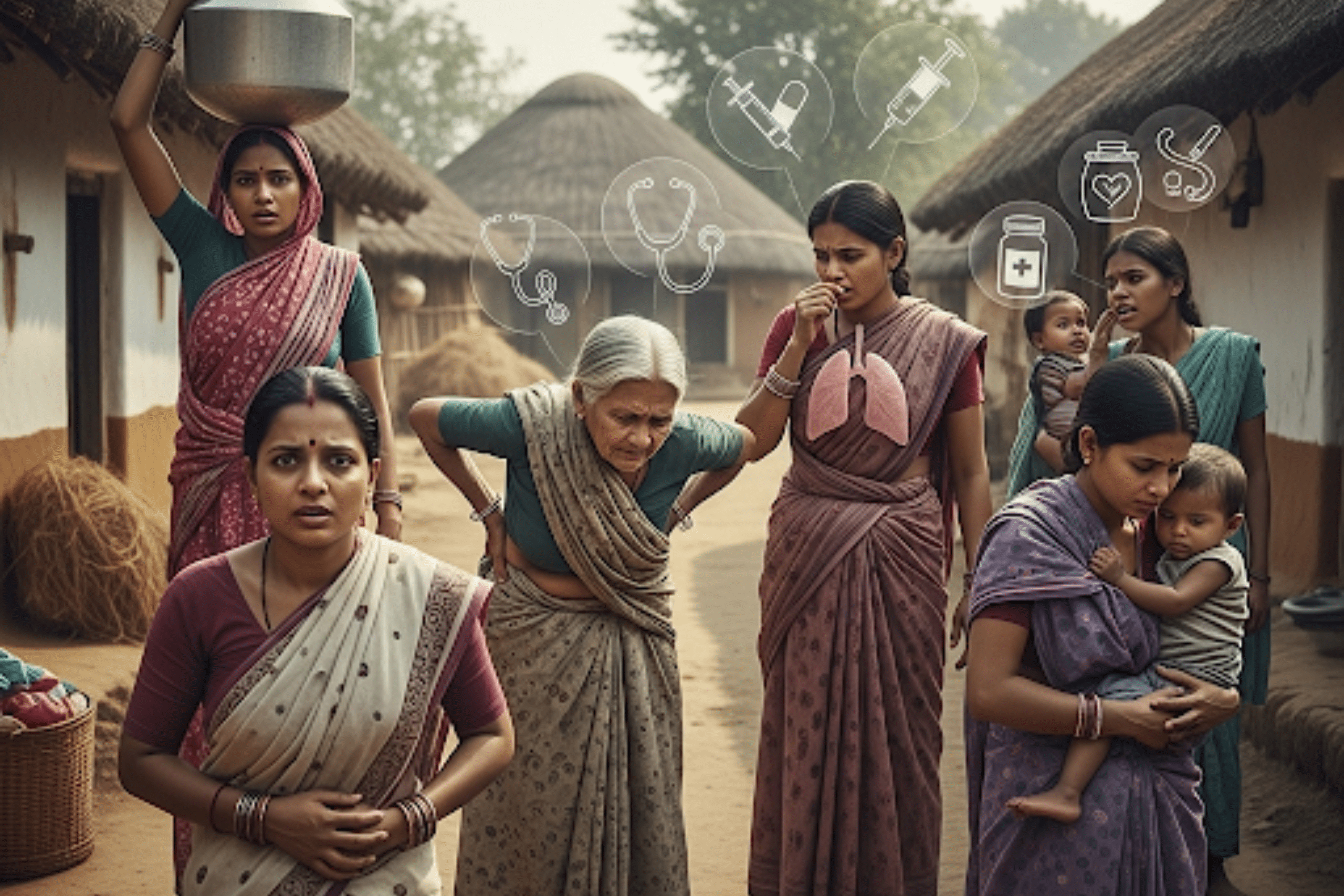
Climate-related events are intensifying in frequency, duration, and severity across India1, placing stress on public health systems already operating under resource constraints. Extreme weather events including heat waves, floods, and cyclones have the ability to compromise healthcare infrastructure, disrupt water and air quality, threaten food security, and affect sanitation systems2.These disruptions exacerbate health crises ranging from heat-related illnesses and waterborne diseases to worsening outcomes for chronic conditions. The Indian Health Ministry records from 2024 have documented over 41,789 heat stroke cases and 143 heat-related deaths3. Shifting climate patterns have expanded vector habitats, and modified breeding seasons and spread4. Adverse climate impacts on health outcomes, and care access and delivery have also been documented5. These health burdens fall disproportionately on populations already facing systemic disadvantages, including residents of informal settlements, outdoor and informal workers with heightened exposure to extreme weather, homeless individuals, pregnant women, infants and children, people living with chronic illnesses, elderly populations, and those experiencing intersecting vulnerabilities6.
Concurrently, India’s public healthcare system faces facility-level infrastructure issues, deficits in workforce capacity and service continuity, and limited surveillance and response systems7. Extreme weather can damage physical infrastructure, affect medical and service supply chains, and overwhelm emergency services in both urban areas and under-resourced rural communities8. Many primary health centers and outreach programs cease functioning in times when climate shocks create greatest demand for sustained, responsive care. Surges in climate-sensitive conditions, including heat stroke, dengue, malaria, diarrheal diseases, can overburden systems lacking adequate preparedness protocols, real-time surveillance mechanisms, and responsive service delivery capacity.
Addressing these interconnected issues requires comprehensive strategies fundamental to maintaining healthcare continuity and advancing health equity as adverse climate events escalate.
Broadly, innovative and forward-thinking expert and peer organizations, including those in participation at the convening, are developing/have developed or are implementing/have implemented various sophisticated approaches to climate-health integration.
For example,
- Comprehensive vulnerability mapping frameworks9 with climate indices, and facility-level resilience assessments, enabling district officials to conduct self-assessments while informing national and state planning processes (National Centre for Disease Control [NCDC] planning and state-level District Action Plan on Climate Change and Human Health [DAPCCHH] processes).
- Climate and hazard vulnerability assessment frameworks6 which factor in multiple determinants, including built environments, radiation, and community-level disparities, guiding municipal authorities on clarity on what to measure.
- District-level dashboards10 that can enable real-time decision-making and resource allocation. (Granular risk indices that integrate climatic, environmental, and demographic factors and support targeted administrative action with frontline worker inputs to help identify and prioritize at-risk populations.)
- Early warning and surveillance systems11 that have the ability to provide sector-specific risk assessments, enabling proactive resource allocation and planned response at the facility level. (Multi-parameter modelling abilities that can incorporate temperature, humidity, radiation, and population diversity enhancing heat and vector-borne disease prediction, supporting smarter public health decision-making.)
- Health workforce capacity10 building efforts that are underway through tele-mentoring models that train frontline workers to recognize and respond to climate-linked illnesses using localized community insights.
- Training programs12 and action plans that equip primary health centre staff to integrate climate and epidemic readiness into routine healthcare delivery, with climate-health protocols incorporated into district action plans.
- Community structures13, governance, and urban local bodies that are being strengthened for implementing decentralized health action.
What still needs thoughtful planning, development, or refining
Alongside the sharing of innovations that have been developed and on-going, the discussion also focused on systemic barriers that continue to persist.
- Data silos and limited to non-existent data integration and interoperability: Data remains fragmented and siloed. Vulnerability assessments remain static snapshots rather than taking on the role of purposive, dynamic, and standardized tools. There is no standardized, granular, real-time, interoperable climate-health data available at the city and hyperlocal levels. Public access is limited, and available data is not fully integrated into decision-making processes.
- Context-specific decision-making frameworks, based on data relevant for climate related health outcomes for a certain ward, city, or region, can help decision-makers at all levels, urban local bodies, public and private providers, and frontline workers.
- Measures and indicators are non-standardized: More fundamentally, what needs to be measured in the climate-health realm, and at what thresholds and scale, remains undefined and non-standardized. Determining which health indicators are appropriate for specific geographies and how to integrate them into standardized assessment tools remains a challenge. One-size-fits-all environmental hazard thresholds are inadequate given varied population needs, densities, and topo-ecological zones.
- While heat stroke has clinical definitions, there are exist no clear metrics for heat-related discomfort or contextual thresholds where heat transitions through the range of “from manageable to requiring intervention”.
- Communication silos: Systematic and established communication channels between communities, civil society organizations, and stakeholders working in the climate-health space, and decision-making systems are limited and/or unstructured, leading to missed opportunities for developing contextual and comprehensive tailored, place-based approaches and coordinated responsiveness.
- Risk assessment frameworks remain narrow: Risk assessments focus predominantly on issues related to, say, reactive medical responses or emissions mitigation while overlooking critical issues like mental health impacts, warm nights versus daytime heat, moist versus dry heat, or the role or availability of green, public spaces.
- Viewing climate through an equity lens needs strengthening – vulnerable populations including migrant construction workers, gig workers, and transient populations with limited resources are not adequately represented in planning processes. Who are the vulnerable in a given context? How do we define vulnerability for a given context, comprehensively? How does vulnerability vary from state to state, region to region, city to city, ward to ward?
- Infrastructure challenges: Health infrastructure is not climate-resilient. Solutions to “upgrade” facilities need to begin with the inclusion of climate resilience features needed to withstand local environmental hazards, and plan for continued functionality and operations of the facility during times of environmental crises.
- In terms of social infrastructure, feasible, affordable solutions such as cooling centers or sustainable cooling solutions need to be ramped up for vulnerable groups (such as outdoor daily wage workers, pregnant women, children, and the elderly), and those who live in dense, packed urban informal settlements.
- Capacity gaps: Health systems and health care workers often lack a basic understanding of climate-linked health risks.
- Frontline workers and communities are not adequately trained to recognize climate exacerbated health symptoms or proactively act on risks of climate impacts on existing co-morbidities or towards compounding vulnerabilities.
- Decentralized planning and implementation lags: Adaptation and resilience require coordination and interventions beyond health departments, yet action plans are often top-down, giving little room for inclusion of communities in the planning process, and limited autonomy and resources to urban local bodies. This hinders the ability to design context-specific, climate-health-responsive plans at city or ward levels.
Conclusions and recommendations for collective action
Envisioning a path forward requires moving from isolated innovations to coordinated ecosystem change.
Five key strategic takeaways that emerged from the discussion were:
Creating the “infrastructure” and maps for collaboration: Collaboratively developing comprehensive ecosystem maps of climate-health actors, tools, interventions, and thematic areas can support open and intentional collaboration, surface complementarities, and identify gaps. An exercise such as this can help consolidate expertise, clarify who is doing what, highlight underserved geographies and groups, and enabling efficient resource allocation.
Building evidence and translating knowledge: Peer and expert organizations coming together to co-publish white papers and knowledge briefs on priority topics, such as the case for hyperlocal climate action plans, building climate-health literacy in urban India, and the importance of designing climate-resilient urban health systems, can provide evidence-based, reliable, structured, consistent messaging to decision-makers.
Designing and implementing joint pilot interventions: Collaborative proposal development and innovative approaches for micro-level, climate-resilient health system intervention models in defined geographies can demonstrate localized integrated approaches, unlocking funding for smaller municipalities, and training and resilience-building for frontline systems.
Establishing engagement mechanisms for knowledge translation: Standardized visual communication protocols can be developed to ensure consistent disaster, health, and community messaging during climate emergencies, facilitating rapid recognition and coordinated response across all stakeholder groups.
- Taskforces established at the city-level can build bridges between urban local bodies, health departments, and climate actors, proactively align solutions with decision-maker priorities, and pilot and implement model city-level plans.
- A push can be made for climate-health planning and interventions to prioritize ward and neighbourhood-levels, as city-level approaches may be too broad to address hyperlocal vulnerabilities and contexts effectively.
Institutionalizing cross-learning through communities of practice: Regular knowledge sharing and expert convenings can improve technical capacity, foster trust and alignment, and build shared language among organizations and climate-health actors across sectors.
Collectively, we can move forward to build trust, legitimacy, and shared language, setting the stage for deeper partnerships and coordinated scale-up efforts that position climate-health as a core investment area rather than a fringe theme.
References:
- India Water Portal. 2025. Gurinder Kaur – Heatwaves, landslides, rising seas: How India’s climate is spiraling in real time. Available at: https://www.indiawaterportal.org/climate-change/heatwaves-landslides-rising-seas-how-indias-climate-is-spiraling-in-real-time
- WHO Brief. 2025. Health and Climate Change. Available at: https://www.worldbank.org/en/topic/health/brief/health-and-climate-change
- Financial Express. 2025. Garima Sadhwani – Warming bells ringing: Extreme heat is taking a heavy toll on lives. https://www.financialexpress.com/business/healthcare/warming-bells-ringing-extreme-heat-is-taking-a-heavy-toll-on-lives/3848477/
- UNDP Blog. 2025. Kathryn Johnson – Climate change and vector-borne diseases: A looming threat we can’t ignore. Available at: https://www.undp.org/asia-pacific/blog/climate-change-and-vector-borne-diseases-looming-threat-we-cant-ignore
- Dasgupta P, Sharma G, Joe W, Chowdhuri M, G G. Health SDGs are at risk from climate change: Evidence from India. PLoS One. 2025 Nov 26;20(11):e0335529. doi: 10.1371/journal.pone.0335529. PMID: 41296661; PMCID: PMC12654917.
- Rangwala, L., S. Chatterjee, A. Agarwal, B. Khanna, I. Uri, B. Shetty, R.B. Palanichamy, and A. Ramesh. 2024. “Climate Resilient Cities: Assessing Differential Vulnerability to Climate Hazards in Urban India.” Report. New Delhi: WRI India. Available online at doi.org/10.46830/ wrirpt.22.00055. Available at https://india.wri.org/sites/default/files/WebFinal_23_CHVA_A4%20Report_24Feb.pdf
- Chatterjee, Ahana, Shreya Wadhawan, Vishwas Chitale, and Pallavi Dhandhania. 2024. Making India’s Healthcare Infrastructure Climate Resilient: A District-level Risk Assessment Framework, India. New Delhi: Council on Energy, Environment and Water.
- Salam A, Wireko AA, Jiffry R, Ng JC, Patel H, Zahid MJ, Mehta A, Huang H, Abdul-Rahman T, Isik A. The impact of natural disasters on healthcare and surgical services in low- and middle-income countries. Ann Med Surg (Lond). 2023 Jul 6;85(8):3774-3777. doi: 10.1097/MS9.0000000000001041. PMID: 37554857; PMCID: PMC10406090.
- Mohanty, Abinash and Shreya Wadhawan. 2021. Mapping India’s Climate Vulnerability: A District-Level Assessment.New Delhi: Council on Energy, Environment and Water. Available at https://www.ceew.in/publications/mapping-climate-change-vulnerability-index-of-india-a-district-level-assessment
- Swasti Climate x Health. Webpage: https://swasti.org/climate-x-health
- ARTPARK. Webpage: https://www.artpark.in/health
- Jhpiego. Webpage: https://jhpiego.org/where-we-work/india/
- KHPT. 2025. Institutional Update: Comprehensive Primary Health Care. Available at: https://www.khpt.org/wp-content/uploads/2025/06/CPHC-Thematic-Update-January-March-2025.pdf